NeuroActive
Stop guessing what your body needs.
Understand the problem. Find what your body responds to. Know what to do next.
Find Your Starting Point
Why are you here?
Start with what you need right now.
Whether something hurts or you simply want your body to work better, the first step is different.
01
I'm in pain
Something hurts. I want to figure out what changes it.
Start by testing how your symptoms respond to movement. Find what helps, what makes things worse, and use that response to guide what you do next.
In-person care is provided at Centre Physical Therapy in Lincoln Park. Call and ask to schedule with Dr. Adam Bruene.
02
I want to move better
I want to build better movement, strength, and control.
Build better breathing, stabilization, mobility, strength, and movement control through a progressive system designed to make better movement increasingly automatic.
Not sure which side you belong on? If pain is stopping you from moving the way you want, start with the pain side. As things improve, the movement program gives you somewhere to build next.
Why NeuroActive is different
The first question isn’t “What exercise should I do?”
Pain, stiffness, weakness, and limited mobility can look similar on the surface, but they don’t always need the same solution. How your body responds can help determine what to do next.
The better question is: “What does your body actually respond to?”
01
Assess before you prescribe.
Instead of starting with a generic exercise list, NeuroActive begins by looking for the movements and strategies that actually change the problem.
02
Treat the response as information.
Pain isn’t just something to turn down. Where symptoms move, how your movement changes, and what happens with repeated loading can all tell us something. The response helps determine what comes next.
03
Change the plan when the problem changes.
Getting out of pain is not the same thing as rebuilding movement. NeuroActive is designed to progress from symptom relief toward control, strength, and better performance.
How NeuroActive works
First change the problem. Then build what’s missing.
NeuroActive combines two different ways of thinking about movement. One helps identify the direction or strategy that changes your symptoms. The other helps build the stability and coordination needed to move well afterward.
01
Find the movement that changes the problem.
Pain often responds differently depending on the direction you move. And where the pain moves can matter as much as whether it gets better or worse. Rather than assuming every back or neck problem needs the same exercises, NeuroActive looks for patterns in how your symptoms and movement respond.
A movement that draws symptoms back toward the spine and improves motion tells us something very different from one that sends symptoms farther away. That response helps determine what to do next instead of simply adding more stretching, strengthening, or treatment.
02
Build the foundation for better movement.
As symptoms settle and movement opens up, the emphasis begins to shift. The body also needs to coordinate breathing, pressure, joint position, stabilization, and movement efficiently.
NeuroActive uses progressive developmental positions and movement challenges to turn better mechanics into better control, strength, and performance.
The NeuroActive approach
The goal isn't more treatment. It's knowing what to do next.
Pain and movement problems get complicated quickly when every new symptom leads to another exercise, treatment, or theory. NeuroActive uses a simpler process: understand what is happening, find what changes it, and build from there.
01
Understand
Start with the problem in front of you.
Don't begin by assuming you need more stretching, more strengthening, or another generic exercise plan. Test movement, pay attention to what changes, and look for a meaningful pattern in how your body responds.
02
Change
Find what moves things in the right direction.
If a particular movement, direction, or strategy improves motion or changes your symptoms in a useful way, that response gives you information. Reinforce what helps, stop chasing what doesn't, and let the response guide the next step.
03
Build
Don't stop at feeling better. Build what comes next.
As pain and movement improve, the goal shifts toward building better breathing, stabilization, mobility, strength, and movement control. Progressively challenge those qualities so better movement becomes something your body can use without constantly thinking about it.
From patients
What it looks like when the approach works.
The goal isn't to keep you dependent on treatment. It's to help you understand what changes the problem, use that response, and know how to keep moving forward.
“
He simply cared about improving my quality of life, and he did just that.
“I never felt like he tried to oversell me on anything or keep me coming to unnecessary sessions.”
Matt A.
Patient review
“
He uses cutting edge approaches for lasting results.
“They were extremely helpful to improve my condition and alleviated pain even within a day. Adam is very knowledgeable and takes time to explain everything carefully and skillfully.”
Larissa B.
Google review · Centre Physical Therapy
“
I also took away an understanding of why I was getting it in the first place.
“I’m more conscious of how I lift and/or stand during my workouts... it’s practically second nature now and I notice a significant difference in how I feel.”
Angie L.
Patient review
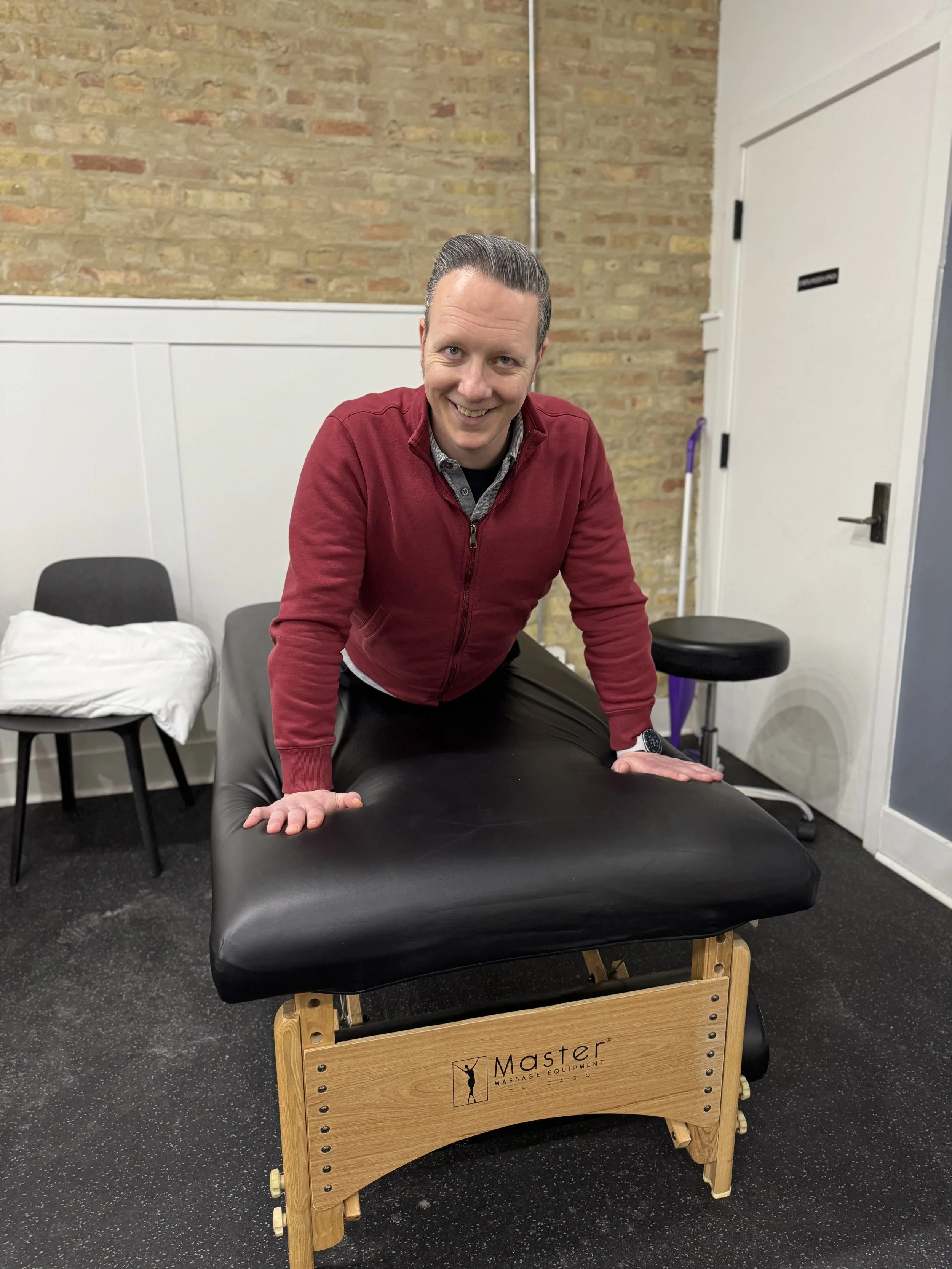
About Dr. Bruene
Two systems changed the way I think about pain and movement.
I'm Dr. Adam Bruene. For more than 17 years, I've worked with people trying to get out of pain, return to the things they love, and understand what actually changes their problem.
Along the way, I became certified in Mechanical Diagnosis & Therapy and Dynamic Neuromuscular Stabilization. My DNS Practitioner training included advanced clinical study in Prague, working alongside Professor Pavel Kolář and the DNS team within their hospital system.
MDT taught me to look for the direction or mechanical strategy that changes symptoms and movement. DNS taught me how to rebuild the breathing, stabilization, coordination, and movement strategies needed once the problem begins to change.
NeuroActive grew out of putting those ideas together: don't guess. Test. Pay attention to the response. Then build from there.
17+
Years in practice
MDT
Certified clinician
DNS
Certified practitioner
From the Notebook
Ideas on pain, movement & performance.
Longer-form writing from Dr. Bruene on rehabilitation, movement, clinical reasoning, and some of the assumptions in health and fitness worth questioning.
Featured article
The Diagnosis You Probably Have and Nobody Told You About
I spent months crooked and bent forward, unable to stand up straight except in water. I was already a chiropractor. What finally fixed my back exposed a gap in how we think about back pain.
Read the article →More writing on pain, rehabilitation, movement, and performance.
More from Dr. Bruene →Choose your next step
Start where you are.
See Dr. Bruene at Centre Physical Therapy, work through your back or neck pain on your own, or build a stronger movement foundation with the 12-week program.
Not sure where to begin? If pain is the main problem, start there. If you're looking to improve stability, mobility, strength, and movement quality, start with the 12-week program. For an in-person evaluation, call Centre Physical Therapy at (312) 585-8567 and ask to schedule with Dr. Adam Bruene.